

Kleine Schiffe können problemlos in Häfen anlegen oder festmachen. Große Schiffe mit erheblicher Öl- oder Gastransportkapazität sind jedoch riesig. Sie in Häfen zu manövrieren, ist sehr schwierig. Daher ist die Methode des Ein-Punkt-Anlegens nützlich, da sie es den Schiffen ermöglicht, im offenen Wasser zu bleiben. Aber wie funktioniert das Single Point Mooring (SPM) Offshore?
Das Festmachen ist zweifellos eine der bequemsten Möglichkeiten, Schiffe oder Boote auf dem Meer zu halten. Es gibt jedoch einen Unterschied zwischen einem einzelnen Punkt und einer herkömmlichen Verankerung. Beim SPM werden die Schiffe an einem einzigen Punkt befestigt, anstatt an mehreren Punkten festzumachen. In diesem Artikel werde ich alles über das Festmachen an einem einzigen Punkt auf See besprechen.
Was ist ein Single Point Mooring (SPM) Offshore-Betrieb?
Bevor wir über die Arbeit sprechen, sollten wir erst einmal wissen, was SPM ist!
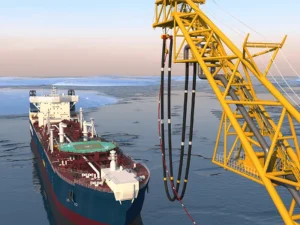
Die Ein-Punkt-Verankerung im Offshore-Betrieb (SPM) ist eine Art der Verankerung, die von großen Schiffen verwendet wird. Dabei handelt es sich um eine Anordnung, bei der das Schiff auf offener See bleibt. SPM wird bei Offshore-Öl- und Gasplattformen eingesetzt. Das Schiff bleibt an einem einzigen Verbindungspunkt festgemacht: einer Boje. So kann sich das Schiff bewegen und sogar um 360 Grad drehen.
In der Regel sind Schiffe auf dem Meer unterschiedlichen Wetterbedingungen und Wellen ausgesetzt. Bei SPM kann sich das an einer Boje befestigte Schiff bewegen. Diese einfache Bewegung ermöglicht es dem Schiff, rauen Winden und Wellen auf See zu trotzen. Betreiber Marineschläuche verwenden um Gas oder Öl auf Offshore-Plattformen zu transportieren. Ohne SPM wäre der Transfer von Öl und Gas von Offshore-Plattformen nahezu unmöglich.
Fragen Sie sich nach dem Zweck der Ein-Punkt-Verankerung im Offshore-Bereich? Diese Verankerungsmethode ist praktisch, da sie es Schiffen ermöglicht, sich problemlos auf offener See aufzuhalten. Es gibt viele Offshore-Öl- und -Gasanlagen, die keine Küstenlinie haben. Ohne SPM ist es nicht möglich, mit einem Schiff an einem Punkt zu bleiben. SPM ermöglicht es Schiffen, an einem einzigen Ort zu bleiben, um Öl und Gas von Offshore-Plattformen zu laden und zu löschen.
Denken Sie daran, dass einige Häfen sehr flach sind. Große Schiffe können jedoch unter Umständen nicht manövrieren oder bleiben. In solchen Fällen bleiben die Schiffe mehrere Kilometer entfernt, wo das Wasser tiefer ist. So können der Kapitän und die Mannschaft Hilfsboote benutzen und zu den Häfen fahren. SPM ermöglicht jedoch einen sicheren Offshore-Öl- und Gastransfer, indem es einen stabilen Anlegepunkt bietet.
Komponenten des Single Point Mooring (SPM) Offshore-Systems
SPM ist nicht nur ein einzelner Prozess, sondern ein komplettes System, das aus mehreren Komponenten besteht. Diese Komponenten arbeiten zusammen, um sicherzustellen, dass Schiffe auf offener See stabil vertäut bleiben. Im folgenden Abschnitt werde ich einige der wichtigsten Teile des SPM-Systems erörtern.
1- Anlegeboje
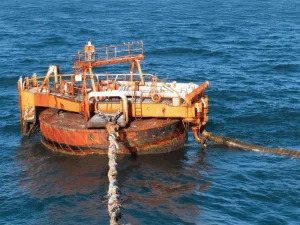
Eine Festmacherboje ist eine schwimmende Struktur, an der das Schiff festgemacht ist. Diese Boje schwimmt auf der Wasseroberfläche. Und warum? Weil sie aus einem Material hergestellt ist, das einen hervorragenden Auftrieb hat. Dadurch schwimmt sie und hält das Schiff an seinem Platz. Festmacherbojen gibt es in verschiedenen Farben und Größen.
2- Festmacherleinen oder - ketten
Verankerungsleinen oder -ketten halten die Boje an dem am Meeresboden befindlichen Anker fest. Dadurch bleibt die Boje an der Wasseroberfläche stehen. Das Schiff wird dann über die Festmachertrosse an dieser Boje festgemacht. Die Festmacherleinen sind stark genug, um die Boje auch bei rauem Wetter fest zu halten. Dadurch funktioniert die Boje reibungslos und hält das Schiff in einem Bereich, während es sich mit dem Wind drehen kann.
3- Verankerungen oder Pfähle
Der Anker wird am Meeresboden an der Stelle installiert. Dieser Anker wird genau an der Stelle angebracht, an der sich die Boje befinden soll. Die Bojen werden dann mit Festmacherleinen oder Ketten am Anker befestigt. Der Zweck dieses Ankers ist es, die Boje intakt zu halten. Es ist ein Irrglaube, dass ein Schiff direkt an diesem Anker auf See befestigt ist. Das Schiff ist an der Boje vertäut, nicht direkt am Meeresboden verankert.
4- Unterwasser-Pipelines und Schläuche
Single Point Mooring (SPM) Der Offshore-Betrieb ist ohne Unterwasser-Rohrleitungen und -Schläuche unvollständig. Die Rohre befinden sich im Allgemeinen auf dem Meeresboden. Diese Pipelines sind lang und mit Offshore-Öl- oder Gasanlagen verbunden. Sie transportieren das Öl von der Anlage zur SPM. Die Schläuche verbinden die SPM-Boje mit der Verteilerstation des Schiffes.
Beim SPM-System wird das Öl von den Schläuchen in den Tank des Schiffes geleitet. Denken Sie daran, dass dieser Öltransfer nicht durch die Bewegung des Schiffes aufgrund von Wellen oder Wind beeinträchtigt wird. Der Grund dafür ist ein Drehgelenk, das verhindert, dass sich der Schlauch verdreht. Der Öltransport wird also auch dann fortgesetzt, wenn sich das Schiff um 360 Grad dreht.
Wie funktioniert die Single Point Mooring (SPM) Offshore Operation?
Im Allgemeinen lassen Schiffe ihre Anker fallen, wenn sie bleiben wollen. Der Anker fällt auf den Meeresboden und hält das Schiff an seinem Platz. Richtig? Das SPM unterscheidet sich jedoch dadurch, dass es keinen Anker auf offener See auswirft. Im folgenden Abschnitt werde ich in drei leicht verständlichen Schritten erklären, wie SPM funktioniert.
Schritt 1: Annäherung und Positionierung des Schiffes
Zunächst nähert sich das Schiff der SPM-Position. Denken Sie daran, dass sich diese Stellen in tieferem Wasser befinden, damit die Schiffe leicht manövrieren können. Außerdem befinden sie sich in der Nähe der Offshore-Öl- oder -Gasanlagen oder Plattformen. Wie ich bereits erwähnt habe, besteht der Hauptzweck von SPM darin, Öl und Gas von Offshore-Anlagen zu laden und zu entladen.
Das Schiff kommt mit einem Schlepper am SPM-Standort an. Dieser Schritt ist nicht dem Geschick des Schiffskapitäns überlassen. Denn schon eine leichte Fehlausrichtung kann dazu führen, dass das Schiff nicht an den Bojen festmacht. Deshalb unterstützen kleine Schlepper das Schiff bei der Annäherung und Positionierung an der richtigen Stelle. Denken Sie daran, dass das Schiff, wenn es die ihm zugewiesene Spur nicht einhält, sogar Rohre oder andere SPM-Strukturen beschädigen kann.
Schritt 2: Anlegen und Schlauchanschluss
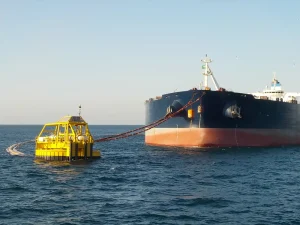
Nachdem das Schiff positioniert wurde, wird es mit der Verankerungsboje verbunden. Wie bereits erwähnt, befindet sich die Boje an der Wasseroberfläche. Sie ist mit dem Anker auf dem Meeresboden verbunden. Das Schiff wird dann mit einer Festmachertrosse an der Boje festgemacht. Diese robuste Festmacherleine sorgt für eine feste Verbindung zwischen der Boje und dem Schiff.
Sobald das Schiff festgemacht ist, werden die Boje und das Schiff mit Schläuchen verbunden. Denken Sie daran, dass die Schläuche das Öl oder Gas von der Boje zum Lagersystem des Schiffes leiten. Die Bojen sammeln das Öl aus den Pipelines unter dem Meeresspiegel. Bevor die Schläuche angeschlossen werden, werden sie überprüft, um sicherzustellen, dass sie nicht undicht sind und das Öl oder Gas sicher übertragen.
Schritt 3: Umladung und Abkopplung
Sobald der Schlauch angeschlossen ist, beginnt der Öltransport. Denken Sie daran, dass die Pipelines das Öl oder Gas zunächst zur Boje leiten. Die Boje ist mit einem Schwenksystem ausgestattet, das eine reibungslose Schiffsbewegung gewährleistet. Der Schlauch saugt dann das Öl von der Boje ab und leitet es in das Lagersystem des Schiffes. Dieser Transfer von Öl oder Gas wird sorgfältig überwacht.
Der moderne Behälter ist mit einem fortschrittlichen Überwachungssystem ausgestattet. Dieses System erkennt den Druck und stellt sicher, dass es während des Transfers keine Lecks gibt. Das Notfallteam bleibt während dieser Vorgänge wachsam. Im Falle eines Problems kann das Team schnell eingreifen und einen unerwarteten Unfall verhindern. Sobald der Transfer abgeschlossen ist, wird der Schlauch abgekoppelt.
Danach wird die Festmachertrosse von der Boje abgekoppelt. Daraufhin wird das Schiff freigegeben und entfernt sich. Die Boje bleibt an ihrem Platz und dient weiterhin zum Be- und Entladen von Öl und Gas. Dieser Vorgang ist sowohl bei Offshore-Öl- und Gasanlagen als auch bei Umladungen von anderen Tanks oder Schiffen gleich. Das Schiff wird an Bojen festgemacht, und das Öl wird durch sie hindurchgeleitet.
Vorteile der Einpunktverankerung im Offshore-Betrieb
Single Point Mooring (SPM) Offshore Operation ist eine weit verbreitete Methode. Fast alle Offshore-Öl- und -Gasanlagen nutzen dieses Verfahren, um ihre Inhalte sicher zu transportieren. Hier sind einige der wichtigsten Vorteile dieses Offshore-Verfahrens:
- Dieses System ermöglicht den Transport von Öl und Gas, ohne dass große Häfen oder Andockstellen gebaut werden müssen. Ohne dieses System wäre der Transport von Offshore-Plattformen schwierig und teuer gewesen.
- SPM kann problemlos mit großen Schiffen umgehen. Die am Anker befestigte Boje ist sehr stark. Daher kann sie große Schiffe während des Öl- oder Gastransports halten. Dieses System kann sogar VLCCs (Very Large Crude Carriers) und Supertanker aufnehmen.
- Einer der wichtigsten Vorteile von SPM ist die Sicherheit. Das an einer Boje befestigte Schiff kann sich um 360 Grad bewegen. Das bedeutet, dass es rauem Wetter, Wind und Wellen problemlos standhalten kann und in einem bestimmten Gebiet bleibt. Außerdem kann Öl oder Gas auch dann umgeladen werden, wenn sich das Schiff aufgrund von Wind oder Wellen bewegt.
- Die Single Point Mooring (SPM) Offshore Operation ist sehr einfach. Der SPM-Standort besteht aus einer Boje, die an einem Anker auf dem Meeresboden befestigt ist. Das Schiff nähert sich der Boje, verbindet sich mit der Trosse, lädt die Ladung um und fährt dann wieder ab. Aufgrund seiner einfachen Komponenten erfordert dieses System wenig bis gar keine laufende Wartung.
- Das SPM ermöglicht den Transfer von Gütern zu sehr günstigen Preisen. Dieses System ist nicht nur auf Offshore-Öl- und Gasanlagen beschränkt. Sie können es sogar nutzen, um Öl von einem großen Tanker auf einen anderen umzuladen. Für diesen Transport benötigen Sie keine traditionelle Hafeninfrastruktur oder Offshore-Terminals.
Schlussfolgerung
Zusammenfassend lässt sich sagen, dass SPM die einfachste und praktischste Methode zum Be- und Entladen von Fracht auf Offshore-Plattformen ist. Viele Offshore-Öl- und Gasanlagen nutzen dieses System, um einen reibungslosen Transport zu gewährleisten. Es umfasst mehrere integrale Komponenten für diese Vorgänge. Dazu gehören die Verankerungsboje, Verankerungsleinen, Anker, Unterwasserrohrleitungen und Schläuche. Das Schiff nähert sich dem SPM-Standort, verbindet sich mit der Boje, und der Öltransport beginnt. Dieses System bietet die schnellste Möglichkeit des Transports, ohne viel zu kosten. In diesem Artikel habe ich erklärt, wie SPM in drei leicht verständlichen Schritten funktioniert.