Single Point Mooring Hawser – Jerryborg Marine

Jerryborg Marine’s single point mooring products are manufactured and supplied in accordance with the relevant OCIMF guidance documents. All products meet the OCIMF requirements for single-point mooring systems, including the OCIMF guidance on mooring line procurement and testing issued in 2000.

As recommended by the OCIMF, terminals should not only focus on the tensile strength of mooring lines when selecting them. The line’s cushioning capacity under stress and its performance after long-term repeated use should also be considered. Specific explanations of these aspects can be found in subsequent OCIMF guidelines related to tanker operations.

It is particularly important to note that the performance of mooring lines is not static. With prolonged use, the new wet breaking strength, stress cushioning capacity, and overall performance of the line will gradually decline. This change is affected by various factors, such as actual service life, frequency of stress, line type and structure, operating environment conditions, presence of damage, and storage conditions when not in use.

Therefore, when selecting mooring lines for the mooring system and establishing corresponding replacement or scrapping standards, terminal operators should comprehensively consider the above factors rather than making judgments based solely on a single data point.
Solicitar presupuesto
Single-Point-Mooring-Hawsers-Jerryborg-Marine
Single Point Mooring Hawser

Materiales

Polyamide (Nylon)

Densidad

1.14g/cm3

Melting Point

218-258℃

Resistencia a la abrasión

Excellent

UV Resistance

Good

Resistencia química

Good

Single Point Mooring Hawsers Structure

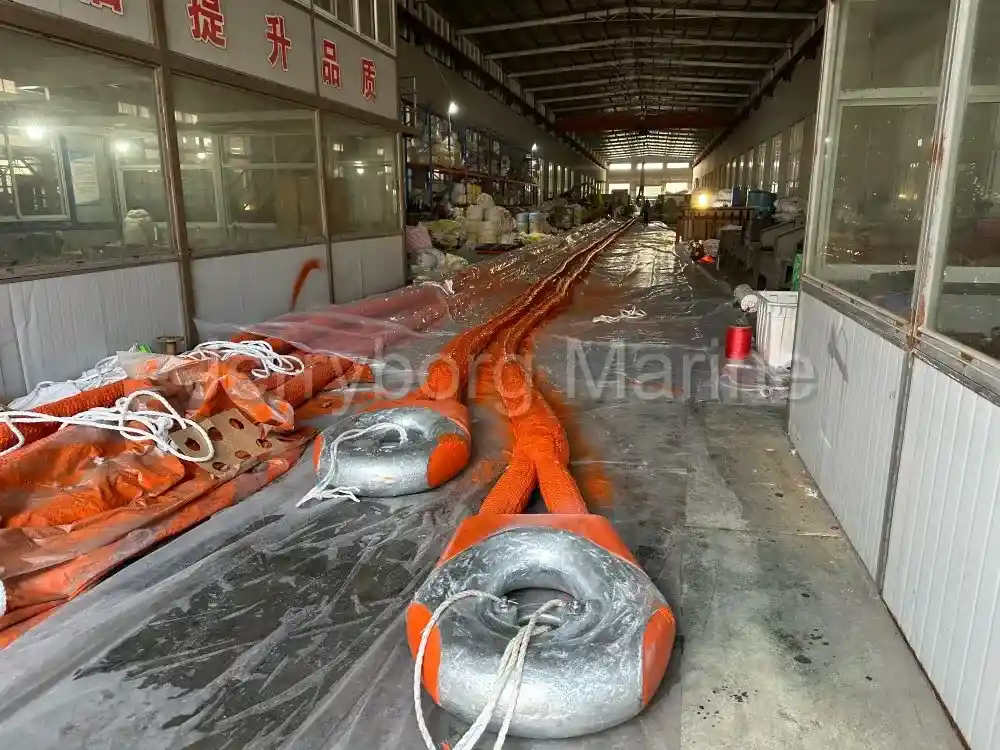
Jerryborg Marine’s nylon double-braided mooring ropes feature a layered braided structure. The inner layer is a 12-strand braided core, with an outer protective braided layer. The overall structure is robust and abrasion-resistant, meeting the strength and stability requirements of single point mooring conditions, thus making it widely used in related projects.

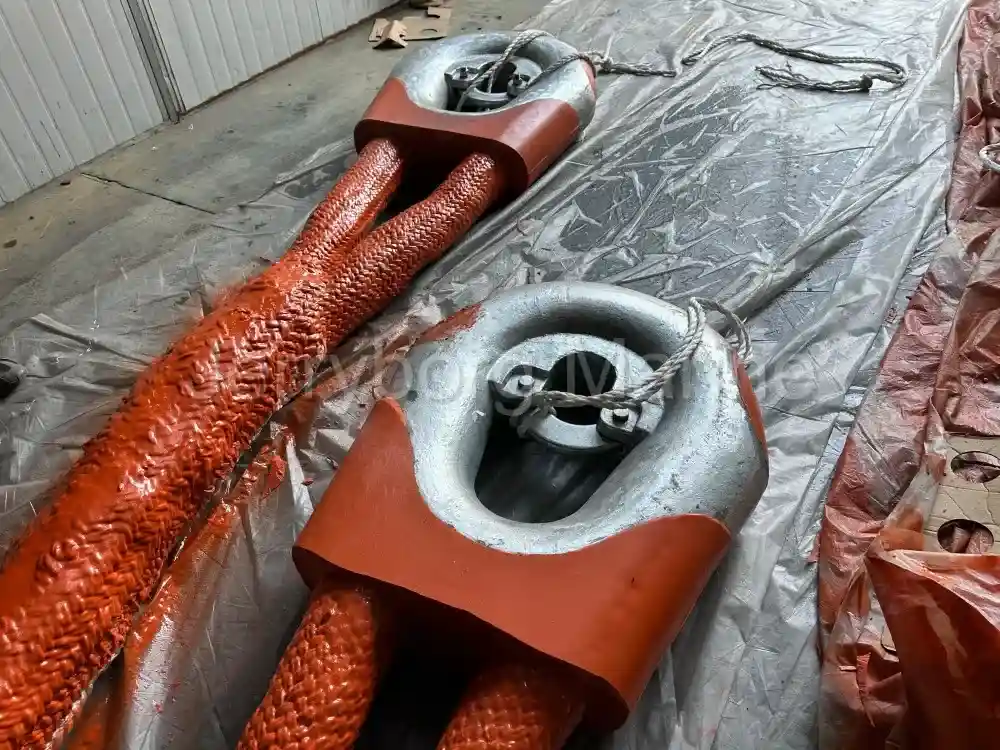
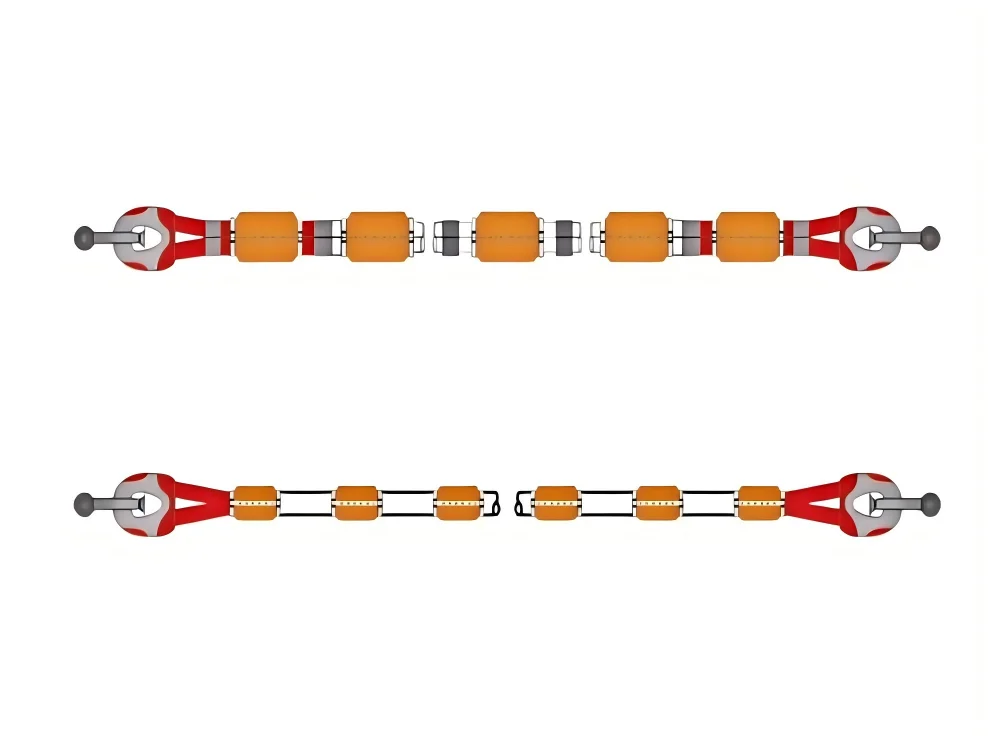
At both ends of the mooring rope, Jerryborg Marine pre-fabricated eyelets are used. Major stress points are equipped with metal protective sleeves, and a polyurethane coating is added to the exterior to reduce wear during long-term use, thereby extending the mooring line’s service life.

Depending on actual usage needs, Jerryborg Marine can also configure appropriate floats on the mooring line to maintain good buoyancy in the water, facilitating on-site operation and management.

The production and testing of this series of nylon double-braided mooring ropes comply with the relevant requirements of OCIMF 2000 for single point mooring ropes.

Solicitar presupuesto
Single-Point-Mooring-Hawsers

Single Point Mooring Hawser Specification

DIAMETER

CIRC

WEIGHT

BREAKING STRENGTH (Ton)

mm

pulgada

kg/100m

Single Leg

Grommet

80

10

398

148

252

88

11

482

179

304

96

12

572

208

354

104

13

672

250

425

112

14

772

288

490

120

15

887

327

556

128

16

1010

368

626

136

17

1140

419

712

144

18

1280

460

782

152

19

1420

501

852

160

20

1580

551

937

168

21

1740

599

1018

Other sizes are available upon request.

Advantages of Jerryborg Marine Hawser

Solicitar presupuesto

Preguntas frecuentes

A mooring hawser is essentially a large cable specifically designed for mooring operations. It’s not the short cable used on ordinary ships, but rather used in single-point mooring or ship-to-ship operations to bear the main tensile force. In many offshore projects, the connection between the ship and the buoy relies heavily on it to withstand continuous tension.

Jerryborg Marine can provide mooring haws of varying strengths depending on the project’s tensile strength. We typically confirm the ship’s tonnage and operating environment first, then recommend the appropriate specifications, rather than providing a generic model.

This type of cable is commonly found in offshore anchorages, single-point mooring buoys, or ship-to-ship transshipment projects. Especially in oil and ore transshipment, where ships don’t dock but connect directly at sea, the hawser is a critical component.

Jerryborg Marine also provides haws when undertaking buoy or fender projects, facilitating a complete solution for clients and eliminating the need to find separate suppliers.

High-strength synthetic fibers, such as nylon or polyester, are commonly used. Different materials have different characteristics; some have high elongation and good cushioning, while others have low elongation and are more stable. The specific choice depends on the project requirements.

Jerryborg Marine will recommend materials based on the client’s operating frequency and stress conditions. For high-frequency ship berthing projects, we will focus more on abrasion resistance and long-term stress performance.

Strength mainly depends on the maximum tensile force of the project. The required breaking strength is usually calculated based on the ship’s tonnage, environmental conditions, and safety factor. It cannot be too low, otherwise there is a risk; nor is it necessary to blindly choose too high, as this will increase costs.

Jerryborg Marine will communicate with the client about the operating conditions before confirming the order. If the client has basic data, we can also assist in verification to avoid selecting the wrong specifications.

After prolonged use, common issues include outer layer wear or localized deformation due to stress. In offshore environments, the effects of salt spray and ultraviolet radiation must also be considered. Therefore, regular inspections are necessary.

Jerryborg Marine conducts basic strength and appearance inspections before shipment. If customers discover any abnormalities later, they can take photos, and we will assist in determining whether replacement is necessary.

The lifespan is greatly influenced by the frequency of operation. Long-term, high-frequency transport projects will experience faster wear. Periodic use will result in a longer lifespan. The key is regular inspection and maintenance.

Jerryborg Marine also reminds customers to perform daily inspections when providing the hawser. With proper use, it can provide stable service for a considerable period.