

Ships and vessels are protected by modern features that prevent accidents. However, sometimes these accidents cannot be prevented despite having modern features. That’s where marine salvage comes in handy. It assists in rescuing the ship or vessel under threat. There are different types of marine salvage.
Each marine salvage operation is unique. Some salvage types are more suited to refloating the ship, while others are better suited to recovering cargo from ships. The salvage team handles all rescue, recovery, or towing of ships in the area. In this article, I will discuss everything about marine salvage and its types. So, let’s get started.
What is Marine Salvage?
Before discussing types, I will first explain what marine salvage actually is. Understanding these basics will help in understanding different types of marine salvage.
Marine salvage is the process of assisting a ship or vessel under threat. This process can help refloat, recover, or tow damaged ships. If ships are loaded with expensive cargo, this process is used to recover all the cargo. This helps prevent loss of expensive cargo when a ship sinks for any reason.
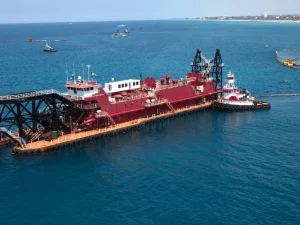
When a ship is damaged, it sends distress signals for help. The nearby ships and salvage companies get these distress signals. These salvage companies have a presence in all parts of the world. So they immediately send the salvage ship and its crew to the ship in danger. These salvage ships meet all the modern requirements for ship recovery.
These include diving teams, underwater robots, pumping systems, cranes, towing chains, and so on. Additionally, these salvage experts are professionals in firefighting procedures. They use advanced firefighting equipment to handle the worst conditions. The salvage experts analyze the ship’s condition and decide on their operations. If a ship can be recovered, they try to tow it to the nearby coastline.
However, if the ship is not recoverable, they then try to recover all the cargo loaded on it. This prevents cargo loss, which is a major advantage of these marine salvages. Not only this, but salvage operations also help in wreckage collection if a ship is already sunk. This is very beneficial for the maritime industry. How? This wreckage collection ensures the path is clear for other ships. If the wreck remained there, it would not allow other ships to pass through that passage.
Types of Marine Salvage
As I said, there are different operations involved in marine salvage. These include recovering ships, recovering cargo, towing ships, repairing ships, and more. These different operations give rise to different types of marine salvage. In the upcoming section, I will discuss the most common types of marine salvage.
1- Offshore Salvage
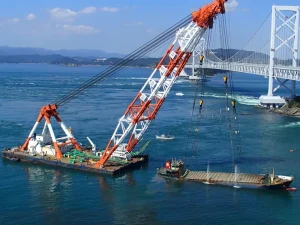
Offshore salvage is a type of salvage in which salvage ships operate in the open sea to rescue ships and vessels. As I said above, vessels travel through deeper oceans during their journey. They can face mechanical failures or other issues in the middle of the ocean. In such a case, offshore salvage is useful. The salvage companies send their large ships to rescue the damaged ship.
The salvage rescue team has all the equipment and safety systems. They can tow the ship using the chains if possible. If a ship is flooded, they remove the water through their pumping system. If a ship cannot be recovered, they secure the cargo from it or other ship equipment. In the worst case, they also help recover the ship’s wreckage, minimizing the loss for the ship owners.
2- Harbor Salvage
Harbor salvage is the process of recovering ships near the coastline. In this type, salvage ships do not have to enter deeper waters. Instead, they specialize in recovering ships involved in accidents near land. Ships can collide at the port, docking platforms, or nearby ships in the harbor. Despite using 마린 펜더, a ship can still be damaged in a severe accident. In such cases, this type of marine salvage is used.
Unlike offshore salvage, this process is much quicker. Why? The reason is that salvage ships reach the accident site because they are near the coast. This way, they can assist the damaged ship and rescue it efficiently. As you know, ports and harbors generally have large traffic. So removing the damaged ship and the wreck quickly is essential. This ensures that other traffic on the ports remains operational without delays caused by accidents.
3- Shipwreck Salvage
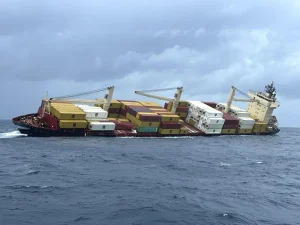
Shipwreck salvage is a complex type of salvage, as it involves recovering sunken ships and vessels. As you know, when a ship is damaged, it sinks to the seabed. Salvage teams use different instruments and equipment to find the exact location of sunken ships. They use sonar systems, ROVs, diving teams, and heavy-duty lifting systems. They first locate the shipwreck and then lift it using advanced machinery.
This process is difficult because diving teams have to go to the wreck for analysis and complete the lifting process. Despite being difficult, shipwreck salvage is of utmost value. The reason is that it sometimes helps recover many ship parts that can be repaired and reused. Additionally, it also clears paths and helps other ships navigate safely.
4- Equipment Salvage
Sometimes ships or vessels suffer severe accidents at sea and sink. This accident is so severe that recovering the ship becomes impossible. That’s where equipment salvage comes into play. In this marine operation, the salvage team focuses on recovering only valuable equipment and tools. For example, a ship’s anchor is very costly.
Similarly, different engine components, generators, and propellers are also expensive. The salvage team goes to the wreckage and dismantles it to find the specific components. Once found, they cut these components and use a lifting system to remove them. These recovered tools can be repaired and used again. In this salvage, the major focus is to recover as much equipment as possible while keeping the salvage process cost low.
5- Cargo Salvage
Imagine oil tankers that face accidents and sink. However, if the oil tanks leak, they will contaminate the water. This will eventually affect aquatic life, causing environmental problems. Additionally, millions of dollars of oil are wasted. Not just oil, it can be a hazardous chemical or something else.
In such cases, cargo salvage helps recover cargo loaded on the ship. I gave an example of oil, but it can be any type of cargo (valuable). The salvage uses advanced machines to secure the expensive cargo without damaging it. This type of marine salvage is the most risky as cargo can be damaged if the salvage team makes any mistake.
6- Afloat Salvage
Afloat salvage is a marine operation used when a ship is uncontrolled but not sunk yet. In other words, a ship or vessel is floating but is in danger of sinking. In that case, afloat salvage recovers the ship by using different techniques. If a ship is flooded, the crew uses a pumping system to remove the water. This helps stabilize the ship and regain control, allowing it to be moved to a safe location.
Similarly, they use firefighting if a ship has a fire on it. Similarly, if there is a power outage, the salvage team makes every effort to restore it. Fire is their priority, but sometimes recovering the ship is not possible due to the extensive damage. That’s where the salvage team tries to recover the equipment and other valuables from the ship. This salvage is used when the ship is not sunk completely.
7- Clearance Salvage
As I said above, ships or vessels can also face accidents in ports or harbors. If this happens, ship-damaged parts can block the port’s passage. This heavily affects the traffic on ports, which can lead to more accidents. Why? The reason is that other ships can come into contact with this wreckage, which can damage their internal parts.
Clearance salvage involves removing all the wreckage or damaged parts from beneath the water. For this, salvage teams use advanced machinery to break down the wreckage. This broken-down debris is then removed from the water’s surface. For removal, salvage companies rely on both dredgers and lifting systems. Despite being near the port, this marine salvage process can be time-consuming.
자주 묻는 질문
Who performs marine salvage operations?
There are large marine salvage companies. They have all the equipment and a dedicated crew to perform salvage operations. Their crew is expertly trained to handle any condition with care.
When is marine salvage required?
Marine salvage is required to assist the ship that is in danger. The salvage team helps the ship reach a safe location if it is not sunk. If it is sunk, and the crew helps recover the ship, its cargo, or its wreckage to minimize the loss.
What does “No Cure, No Pay” mean in marine salvage?
This means that salvage companies are only paid by the ship owner if they recover the ship or its cargo. If their salvage operation fails to recover anything, they will not be paid.
How long does a salvage operation take?
There is no fixed time duration for a salvage operation. If the ship is not sunk, salvage operations can successfully end in a few hours. If the ship is sunk, the operation can take weeks.
결론
Let’s conclude: Marine salvage is a very useful operation that assists ships under threat of damage. Such ships send distress signals so that salvage teams can reach them quickly. Ships generally take a few hours when sinking; in such cases, the salvage team can recover most of the ship’s cargo or crew. However, if the ship is already sunk, the salvage team attempts to recover its equipment and components. In this article, I have discussed all the popular types of marine salvage. Remember, each type of salvage is equally important depending on the conditions of the damaged ship.