

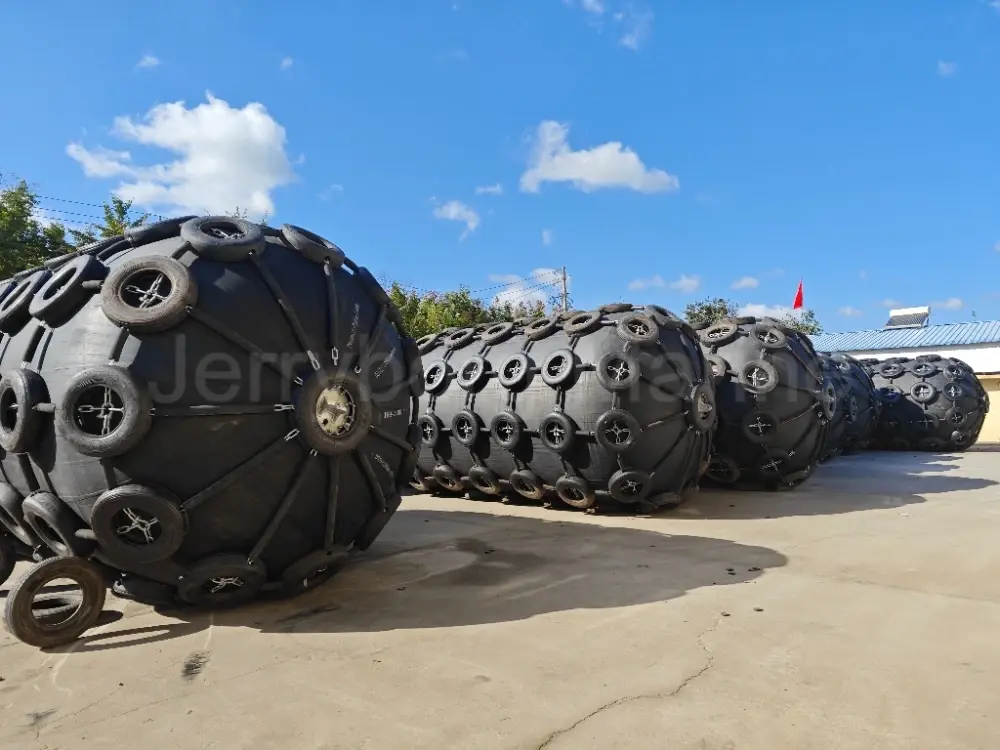
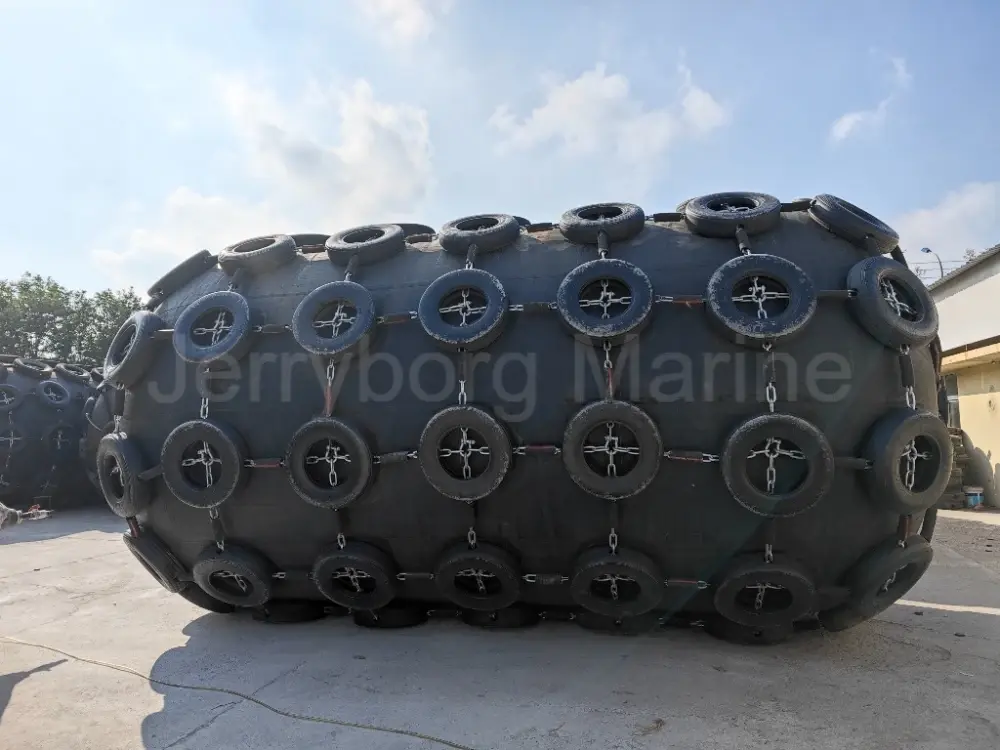
| Размер | D 3.3 × L6.5 mtrs |
| Начальное давление | 50 кПа |
| Количество | 8 pcs |
| Страна | Уругвай |
| Год | 2025 |
This client is an iron ore transshipment company, operating their project at an anchorage off the coast of Uruguay. There’s no fixed pier there; large ships are moored outside, and the iron ore is transferred to barges via ship-to-ship docking. Because it’s iron ore, the ships are generally lightly ballasted and heavily loaded, resulting in a significant impact during berthing.
When the client first contacted us, they actually sent us a photo of the site. The photo showed two ships very close together, with several old fenders hanging between them, clearly worn and showing considerable wear. They explained that their recent increased operational frequency had strained the existing fenders, so they wanted to replace them with new ones.
During the communication, their primary concern wasn’t the specifications, but whether the fenders could withstand heavy berthing. They mentioned that they sometimes berth several times a day, and unstable fenders would cause significant stress for the operators. We asked them to send us their usual ship type, tonnage, beam, and approximate berthing method. After confirmation, we recommended using larger diameter inflatable rubber fenders, along with chain netting and tire protection. Given the high dust and friction associated with iron ore, proper external protection is crucial.
After the quote was confirmed, the client moved quickly because they had already arranged the transshipment plan. During production, we reinforced the rubber layer thickness and thoroughly inspected the internal airtight layer. The client inquired about the production progress twice, and we sent them photos of the progress each time.
Before shipment, we sent the client photos of the inflation test and the dimensional confirmation drawings. The client was satisfied after reviewing them and then arranged for sea freight.
The fenders arrived at the port and were quickly put into use. The client later reported that the cushioning was smooth when berthing under full load, without any sudden feeling of being blocked. Because they operate at high frequency, almost daily, the outer layer of protection has not shown any obvious abnormalities. They later ordered an additional batch of fenders of the same specifications for use on two other work vessels.
Boat-to-ship projects actually place high demands on fenders. They not only need sufficient energy absorption capacity but also must be suitable for long-term continuous use.
This Uruguayan iron ore project gave us a more direct understanding of the actual usage environment in the South American market. Sea conditions, operating frequency, and maintenance habits all differ from those in other regions.
We are still in contact with this client. If new shipping projects arise in the future, they will prioritize continuing our cooperation.