

| Продукт | Плавающий шланг |
| Размер | 16 inch × 12.2 m |
| Рабочее давление | 15 bar |
| Количество | 10 pcs |
| Страна | Нигерия |
| Год | 2025 |
This client is involved in offshore crude oil transshipment, with the project located in the coastal area of Nigeria. The operation is a ship-to-ship transfer model, with large vessels anchored in the open sea and crude oil transferred to connecting vessels via floating hoses. Because the entire transfer process takes place on the sea surface, the buoyancy of the pipes directly affects on-site operations.
When the client first contacted Jerryborg Marine, they inquired about our ability to manufacture floating hoses for offshore transport. During subsequent communications, they mentioned that a batch of hoses they had been using for several years was experiencing outer layer wear and localized buoyancy instability. Although they hadn’t completely retired them, their on-site personnel were already concerned about the long-term continuous operation.
A key concern for them wasn’t pressure, but rather whether the hoses could maintain stable buoyancy after changes in sea surface conditions. Because the sea area at the project site isn’t completely calm, the surface sometimes fluctuates continuously, and significant buoyancy changes in any section would make on-site control difficult.
We then asked the client to send us the transport medium, transport method, and approximate pipeline layout. After confirmation, Jerryborg Marine recommended using a floating hose with an integrated floating structure. This results in a more uniform overall floating state, reducing the likelihood of any significant sinking in any particular section.
Another key aspect is the outer layer. Given the repeated towing and prolonged exposure to the sea at sea, we considered both wear resistance and seawater resistance in the outer layer. The client specifically mentioned they didn’t want the outer layer to peel or wear too quickly after a short period of use.
After confirming the quote, the client moved quickly, as they had already arranged a new transport schedule. During production, the client was particularly concerned about the float and overall testing, and we provided them with several on-site photos and test videos for confirmation.
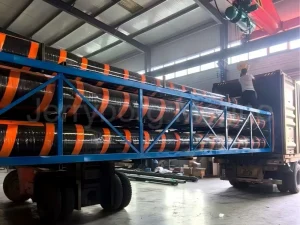
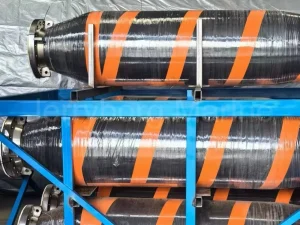
Before shipment, Jerryborg Marine sent the client pressure test photos, dimensional confirmation diagrams, and overall arrangement photos. After client confirmation, shipment was quickly arranged.
After the floating hose was put into use, the client reported that the overall floating state was more stable than before. Especially during periods of continuous sea movement, the entire pipeline did not exhibit significant unevenness, making on-site operations easier.
This project gave us a more direct understanding of the actual operating environment of offshore floating transport. Often, what’s truly important on-site isn’t a single parameter, but rather the long-term, stable operation of this batch of pipes.
We are currently maintaining contact with this customer. They have plans for new conveyor lines and intend to continue using the same type of floating hose configuration.