


An anchor is an object that ships drop in a water body during their stay. It goes deep into the seabed and keeps the ship safe against unnecessary drifting. Anchors remain connected to the ship via strong, rugged chains. There are different components of an anchor chain that can withstand the load when the anchor is dropped.
It is worth noting that anchor chains are subject to significant forces and stress. This stress is even more intense when ships face uneven waves, winds, and bad weather. However, it remains intact, ensuring the anchor remains connected to the vessel and keeps it stationary. In this article, I will discuss all the key components of anchor chains and their role. Let’s get started.
What is Anchor Chain?
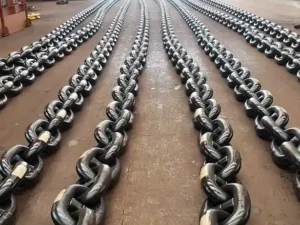
An anchor chain is a long and strong metallic chain used in marine operations. It helps connect the anchor to the ship, thereby securing the ship or vessel in a stationary position. These chains are so durable that they can easily withstand the harsh load when a ship faces waves or winds. Their primary role is to work with anchors to secure vessels in the sea.
As I said, anchor chains are subjected to extreme stress or force during bad weather. The reason is that harsh winds, waves, and currents exert force on ships. The chain attached to an anchor resists the ship’s drift. During this, chains are subjected to harsh loads, and if they are not strong enough, they may break. If they break, it can result in a maritime disaster as the ship will lose its anchor, drift away, and collide with other ships.
Therefore, these anchor chains are made from high-strength steel. Additionally, manufacturers apply coatings to ensure these chains remain corrosion-resistant. Modern anchor chains are made from galvanized steel, so they typically don’t corrode even when in contact with seawater.
Interestingly, the anchor chains are of various sizes. The chain size for the vessel depends on its size.
A ship with a large size and weight requires a longer anchor and a heavy-duty anchor chain, and vice versa. These chains are stored in special compartments on the ships. When the anchor is dropped, these chains automatically drop into the water. Interestingly, these chains are generally made to be heavy. This weight is essential as it exerts force on the anchor. As a result, the anchor remains firmly on the seabed and bites in. As a result, the ship does not drift due to the strong connection of the anchor with the seabed.
Components of an Anchor Chain
As I mentioned earlier, anchor chains consist of several components. These components contribute to the strength and durability of these chains. As a result, chains can be used in the harshest marine conditions. In the section below, I will discuss each component of anchor chains.
1- Stud Link Chain
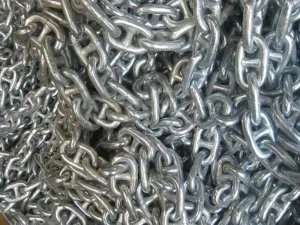
The Stud Link chain is an integral part of the anchor chain. These chains consist of links with a stud in the middle. A stud is a metal bar that increases the stability of a link. Each link in this chain consists of a dedicated stud. In other words, a stud goes along the chain and is present in the middle of each link. These links form a fully functional chain.
The presence of studs in the middle of each link prevents the chain from twisting. Remember, if the anchor chain twists or deforms, the risk of breaking increases. The link consists of a stud that generally has a bar shape. The anchor chains generally do not wear out quickly or collapse because of the studs between the links.
2- End Link
The end link is another integral part of anchor chains. It is generally larger than the other regular links that make up the chains. It is present at the end of the anchor chain. The main role of this end link is to connect the anchor chain to other parts of the system. These include the swivel and end shackle. In other words, the end link acts as an attachment.
Because it is exposed to harsh loads and typically remains submerged, it is larger. Additionally, it is made of a thicker, more durable material to withstand harsh loads or forces. As I said earlier, the weight of the chain rests on the anchor and keeps it in place on the seabed. This load transfer from anchor to anchor chain happens through this end link.
3- Kenter Shackle
Sometimes, anchor chains can face harsh jerks. This jerk can affect or damage some parts of the chain. That’s where the Kenter shackle comes in handy. It is the removable link consisting of a pin or bolt that can be removed. Its role is to connect two pieces (chains).
It also helps join other components, such as a swivel or an end link, to the chains. If the chain section is damaged and requires repair, you can remove the pin from the Kenter shackle (detachable link). As a result, you’ll be able to separate the damaged section from the anchor chain. So this small piece of chain will go for repair without taking the whole chain.
4- End Shackle
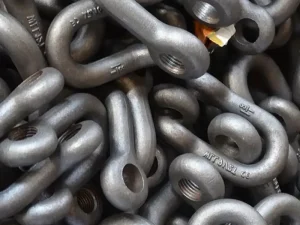
The end shackle, also known as the anchor shackle, is an important component of the anchor chain. The end shackle is slightly larger and serves as a metal connector. How? The reason is that it is directly connected to the anchor, ensuring a strong joint between the anchor and the anchor chain. This connection point generally faces extreme tension.
In fact, when the harsh wind and current exert force, this end shackle absorbs that force. As a result, the connection between the anchor chain and the anchor remains firm and secure. Since this part is exposed to consistent stress, it is durable and can withstand harsh stress. In other words, this is the part that ensures the chain does not detach from the anchor, even in harsh weather.
5- Enlarged Link
The enlarged link makes the anchor chain more flexible. It is a connection point generally located at the transition points. These are the points where two chain pieces (sections) join together. This enlarged link is larger because it needs to provide a connection area or space for different components. Parts are connected through an enlarged link; they produce no separate stress point. This way, the anchor chain remains free from stress and strong against the harsh forces.
6- Swivel
The swivel is a practical component responsible for the safety of both the anchor chain and the anchor. Without this part, the anchorage system fails. This is the part connected to the end link and allows the anchor chain to rotate. Remember, the anchor chain withstands harsh forces, especially during turning, which can cause it to move and rotate.
If there is no swivel, it would cause twisting, deformation, and collapse of the anchor chain. However, the swivel connected to the end link and end shackle allows smooth rotation. This rotation ensures that anchor movement remains independent of that of the anchor chain. As a result, the movement of the anchor chain does not affect the durability of the anchor.
Secondary Anchorage Parts Associated with Anchor Chains
Apart from the above-mentioned, the anchor chains are also associated with some other components. Although they are not direct components of these chains, they have a role in controlling the anchor chains. Here is the list of these secondary components:
- Windlass
- Hawse Pipe
- Chain Locker
- Chain Stopper
A windlass is one of the most important machines on a ship or vessel. Its role is to launch the anchor in the water body when the ship plans to stay stationary. With this machinery, the anchor chain is either raised or lowered. This helps either drop or lift (retrieve) the anchor from the water body.
The hawse pipe is the exact part where the anchor chain travels as it drops into the water. The next component is the chain stopper. As I said, the windlass helps lower the anchor chain to drop anchor. When the anchor reaches the destination (deployed), the chain stopper comes into action.
It keeps the chain in place, reducing extra stress on the windlass. If there were no chain stopper, the windlass would be under stress for long hours and days. This consistent load or stress would damage the windlass. Last but not least, the chain locker is a compartment on the ship. When not deployed, the anchor chain remains stored in this locker for better safety and durability.
Conclusione
Let’s conclude – anchor chains are a must for safer marine operations. Without them, ships or large vessels may not be able to remain stationary. Remember, ships have to stay in the middle of the ocean for several reasons. Anchor chains come in handy when the anchor is dropped in a water body.
These chains are so rugged and durable that they hold the ship in place even under harsh weather. Therefore, sailors generally drop anchor in the harshest winds, currents, and waves. Several components make anchor chains so strong and reliable. In this article, I have discussed various parts of the anchor chains.