


I parabordi marini sono in uso da decenni. In effetti, le operazioni marine come l'attracco, l'ormeggio e altre attività sono impossibili senza di essi. Esistono diversi tipi di parabordi marini. Tra questi, i parabordi pneumatici sono molto popolari. Tuttavia, molti non hanno idea di cosa siano, quindi si chiedono: cos'è un parabordo pneumatico in gomma?
La funzionalità principale di questi parabordi pneumatici è simile a quella di altri tipi. Tuttavia, hanno una struttura unica e funzionano ad aria compressa. Il gas compresso al loro interno fa sì che assorbano la forza dell'impatto. In questo articolo parleremo dei parabordi pneumatici in gomma, del loro funzionamento, dei tipi e di molto altro ancora. Iniziamo.
Che cos'è un parafango pneumatico in gomma?
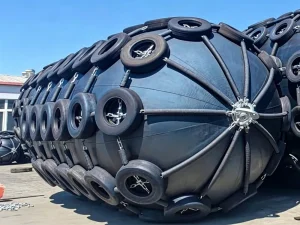
Parafanghi pneumatici in gomma sono stati sviluppati e utilizzati per la prima volta in Giappone. In seguito si sono diffusi in tutto il mondo per la loro efficacia nell'assorbire la forza d'urto. Vengono utilizzati sia su strutture di attracco che su navi e imbarcazioni.
I parabordi pneumatici in gomma sono dispositivi di protezione utilizzati su navi e porti. Sono molto utili per proteggere navi e imbarcazioni da collisioni dirette con la struttura portuale. Questi parabordi sono riempiti d'aria, il che li rende molto efficienti. L'aria compressa aiuta ad assorbire la forza d'urto quando una nave si scontra con una piattaforma di attracco.
Prima di tutto, i parabordi pneumatici possono galleggiare sull'acqua e sono adatti a proteggere le navi. Come discusso negli articoli precedenti, esistono diverse operazioni marine. Tra queste, le operazioni da nave a nave e da nave a banchina. Le navi non hanno freni che le fermino prima di colpire la struttura di attracco. Di conseguenza, possono colpire la struttura di attracco e subire danni.
I parabordi pneumatici sono installati sulla struttura di attracco. Quando la nave si avvicina alla banchina, entra in collisione con i parabordi anziché con la struttura di attracco. Questi parabordi assorbono la forza d'urto grazie all'aria compressa al loro interno. In questo modo si evita che le navi si scontrino con la struttura di attracco e subiscano un impatto diretto.
In questo modo, sia la nave che la piattaforma di attracco rimangono al sicuro. Questi parabordi pneumatici possono essere utilizzati anche sulle navi durante le operazioni STS (ship-to-ship). Ricordiamo che le navi possono trasferire il carico in mare attraverso le operazioni marine STS. I parabordi pneumatici installati sulle navi le proteggono da eventuali danni quando le navi sono molto vicine.
Struttura del parafango pneumatico in gomma
I parabordi in gomma pneumatica hanno una struttura a più strati. Di conseguenza, questi parabordi sono molto resistenti e durevoli. Lo strato superiore di questi parabordi è realizzato in gomma sintetica. Questo materiale gommato è resistente ai raggi UV, al calore, alla luce solare e all'umidità. Anche quando viene utilizzato per giorni, questo strato rimane resistente.
Dopo questo strato superiore, segue un secondo strato di corde di pneumatici rinforzate. Queste corde conferiscono ai parabordi marini la forza necessaria per resistere agli urti. Vale la pena di notare che questi strati di corde di pneumatici non sono presenti in modo casuale. Sono invece posizionati in modo strategico e formano schemi incrociati.
Questa disposizione conferisce ai parabordi forza e robustezza. Dopo lo strato intermedio, questi parafanghi hanno camere dedicate per contenere l'aria compressa. Lo strato intermedio, costituito da corde di pneumatici, conferisce a questa camera la forza necessaria per mantenere la sua integrità. L'aria viene compressa quando la nave o l'imbarcazione si scontra con essa.
Questa compressione assorbe l'impatto e protegge sia la nave che la struttura di attracco. Per riempire l'aria compressa, questi parabordi marini contengono delle valvole. Ricordate che potete riempire la camera con aria compressa se è sgonfia. Oltre a questo, sul lato superiore dei parabordi si trovano anche delle catene. Queste catene proteggono i parabordi, garantendone la sicurezza e la durata.
Come funziona un parafango pneumatico in gomma?
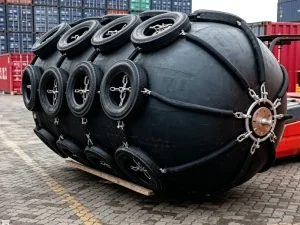
Prima di spiegarne il funzionamento, analizziamo il principio di funzionamento di questi parafanghi:
Il principio di funzionamento dei parabordi pneumatici in gomma si basa sulla compressione dell'aria. L'aria all'interno dei parabordi si comprime e assorbe la forza d'urto. Questo assorbimento fa sì che la nave non debba subire forze violente. Ciò si traduce in una maggiore sicurezza sia per le navi che per la struttura di attracco.
Sulla struttura di attracco sono impiegati o installati parabordi pneumatici in gomma. La nave o l'imbarcazione che si avvicina al molo non ha freni. Il capitano della nave spegne il motore in modo da rallentare. Tuttavia, non c'è modo di applicare una frenata improvvisa, quindi la nave si ferma prima di entrare in contatto con la piattaforma di attracco.
È qui che si rivelano utili i parabordi pneumatici, presenti sulla piattaforma di attracco. Questi parabordi si frappongono tra la nave e la struttura di attracco. In questo modo, le navi o le imbarcazioni, invece di entrare in collisione con le strutture di attracco, entrano in contatto con i parabordi. Al momento della collisione, l'aria all'interno dei parabordi si comprime. Questa compressione dell'aria assorbe la forza d'urto.
Come suggerisce il nome, questi parafanghi sono realizzati in gomma. Il materiale in gomma disperde e distribuisce la pressione sulla superficie del parafango. In questo modo, la pressione viene distribuita in modo uniforme anziché concentrarsi in un unico punto. La distribuzione uniforme della pressione è fondamentale per aiutare questi parafanghi a resistere alle forze e alle sollecitazioni più forti. Di conseguenza, questi parabordi proteggono la nave e la struttura di attracco.
Ricordiamo che questi parabordi pneumatici possono essere utilizzati sia su strutture di attracco che su navi. Tuttavia, il meccanismo di funzionamento di base rimane lo stesso: l'aria si comprime per assorbire la forza d'urto. Ciò che rende questi parabordi molto sicuri è la loro bassa forza di reazione. Questo è un altro vantaggio per la sicurezza sia delle navi che delle piattaforme di attracco.
Tipi di parabordi pneumatici in gomma
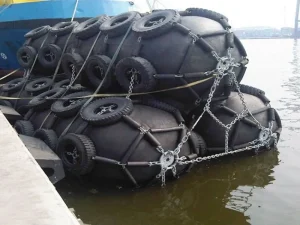
I parafanghi pneumatici in gomma sono di diversi tipi. Si differenziano in termini di protezione e peso. Di seguito sono riportati alcuni dei tipi più diffusi di parafanghi:
- Parafango idro-pneumatico
- Parafango pneumatico di tipo netto
- Parafango pneumatico a fionda
I parabordi pneumatici a rete sono noti per la loro eccellente resistenza. La loro struttura interna è uguale a quella di qualsiasi altro parabordo pneumatico. Tuttavia, la loro superficie esterna è costituita da una rete di catene. Queste catene sono avvolte intorno al lato esterno, garantendo un'eccellente resistenza. Queste catene contribuiscono a rendere i parabordi più resistenti all'abrasione e all'usura.
Parabordi pneumatici a fionda non hanno catene esterne. Di conseguenza, questi parabordi pneumatici sono molto leggeri e facili da trasportare. Entrambe le estremità di questi parabordi sono dotate di imbracature, una caratteristica fondamentale. Queste imbracature o corde aiutano a sollevare i parabordi ad altezze maggiori. L'installazione di questi parabordi è facilitata dall'uso delle imbracature. È possibile installarli facilmente sulla nave o sull'imbarcazione utilizzando queste imbragature.
Infine, il parafanghi idro-pneumatici Si differenziano per la combinazione di aria compressa e acqua. Di conseguenza, questi parabordi mantengono la galleggiabilità e assorbono gli urti. L'aria compressa all'interno delle camere si comprime durante la collisione. In questo modo, i parabordi assorbono la forza d'urto. Allo stesso modo, l'acqua all'interno dei parabordi aiuta a controllarne la galleggiabilità.
Come sapete, alcune navi hanno scafi di grandi dimensioni. Alcune parti dello scafo rimangono sommerse e possono entrare in collisione con la piattaforma di attracco. Per proteggere lo scafo, questi parabordi idro-pneumatici sono molto importanti. Questi parabordi rimangono sommersi, mantengono la loro posizione e la loro galleggiabilità. In questo modo, proteggono lo scafo dalla collisione diretta con la struttura di attracco.
Caratteristiche o vantaggi principali dei parabordi pneumatici in gomma
I parabordi pneumatici in gomma presentano numerose caratteristiche utili. Di conseguenza, l'uso di questi parabordi sta diventando prevalente. Nella sezione che segue, illustrerò alcuni dei vantaggi più diffusi di questi parafanghi. parabordi marini:
-
Capacità di assorbimento dell'energia
Il vantaggio principale dei parabordi pneumatici è la loro eccellente capacità di assorbire l'energia. Questi parabordi sono dotati di camere dedicate riempite di aria compressa. Quando una nave entra in collisione, l'aria all'interno delle camere si comprime. Questa compressione assorbe l'energia, proteggendo la nave o l'imbarcazione dal forte impatto.
-
Non respingere con forza
I parafanghi in gomma pneumatica offrono una bassa forza di reazione. Come detto, l'aria si comprime e assorbe l'energia. Successivamente, il materiale in gomma distribuisce la pressione sulle superfici dei parafanghi. Questa distribuzione della pressione riduce la forza di reazione. Il parabordo non spinge con forza contro la nave. Una forza di reazione minima o nulla rende questi parabordi sicuri sia per le navi piccole che per quelle grandi.
-
Capacità di galleggiamento e versatilità
I parabordi pneumatici di tutti i tipi possono galleggiare sull'acqua, il che rappresenta un vantaggio significativo. Come ho detto, i parabordi idro-pneumatici hanno sia aria compressa che acqua. L'acqua che riempie le loro camere ne aumenta la galleggiabilità. Di conseguenza, questi parabordi sono in grado di mantenere la loro posizione anche in condizioni climatiche avverse. Questi parabordi sono disponibili in dimensioni piccole, medie e grandi.
-
Ampia area di contatto
Come già detto, i parabordi pneumatici più grandi coprono una superficie maggiore della nave. Ciò significa che possono proiettare un'area più ampia della collisione direttamente sulla struttura di attracco. Inoltre, alcuni parabordi pneumatici sono disponibili in dimensioni da piccole a medie. Sono l'opzione ideale per le navi di medie dimensioni e le proteggono dalle collisioni.
-
Resistenza agli ambienti difficili
I parabordi in gomma pneumatica sono eccellenti contro le condizioni ambientali difficili. Lo strato esterno di questi parabordi è realizzato in gomma sintetica. Questa gomma è in grado di resistere ai raggi UV, al calore e all'acqua salata, tra le altre condizioni. Di conseguenza, questi parabordi rimangono in buone condizioni anche dopo molti anni di utilizzo costante. Soprattutto, i parabordi in gomma pneumatica sono resistenti anche alle abrasioni impreviste.
Domande frequenti
Dove si usano i parabordi pneumatici in gomma?
I parabordi pneumatici in gomma possono essere utilizzati in porti, moli e strutture di attracco. Possono essere utilizzati anche su una nave o un'imbarcazione durante un'operazione marina da nave a nave.
A cosa servono i parafanghi pneumatici in gomma?
I parabordi pneumatici in gomma sono realizzati per proteggere sia le navi che le piattaforme di attracco. Vengono posizionati tra la nave e la struttura di attracco. In questo modo, la nave entra in collisione con questi parabordi anziché colpire direttamente la struttura di attracco. Questi parabordi assorbono la forza d'urto, proteggendo la nave.
I parafanghi in gomma pneumatica sono migliori dei parafanghi normali?
Sì. I parafanghi in gomma pneumatica sono migliori di quelli normali. Perché? Perché contengono aria compressa. Quando le navi si scontrano con essi, l'aria si comprime e assorbe efficacemente la grande quantità di energia cinetica della nave. I parabordi normali non possono assorbire quanto questi parabordi.
Conclusione
Concludiamo: i parabordi marini di tutti i tipi sono fondamentali per la sicurezza delle navi e delle altre imbarcazioni. Tuttavia, i parabordi pneumatici si distinguono per l'eccellente compressione dell'aria. Di conseguenza, la loro capacità di assorbire la forza d'urto non è seconda a nessuno. Ecco perché molti porti e moli di grandi dimensioni utilizzano parabordi pneumatici.
In questo articolo ho spiegato tutto sui parafanghi pneumatici e sul loro funzionamento. Ricordate che esistono diversi tipi di parafanghi gommati. Al momento dell'acquisto, assicuratevi di scegliere il tipo di parafango pneumatico di cui avete effettivamente bisogno. Se l'acquisto è destinato a imbarcazioni di piccole dimensioni, vi consiglio di scegliere parabordi pneumatici di piccole o medie dimensioni.