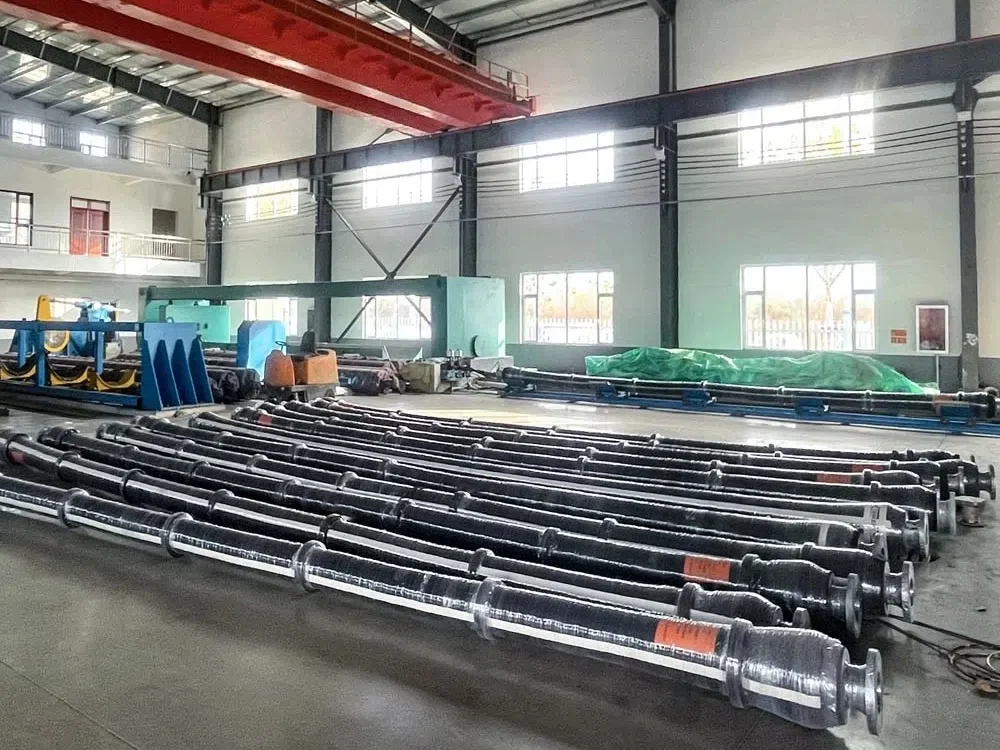
Jerryborg Submarine Hose

Jerryborg submarine hoses are designed for use in harsh offshore environments. Their lining compounds are highly resistant to high aromatic hydrocarbons and remain stable under pressure surges and external compression. The hose construction has high tensile strength, strong interlayer adhesion, and excellent burst pressure capability. With an abrasion-resistant outer layer and low loss of buoyancy under pressure, Jerryborg hose is also available with an optional mechanical leak detector and lifting lugs for increased safe working loads.

Jerryborg submarine hoses are designed to meet OCIMF standards and are manufactured and tested under an ISO 9001:2015 certified quality system to ensure consistent performance.
Contact Us
Jerryborg-submarine-hose

Submarine Hose Types

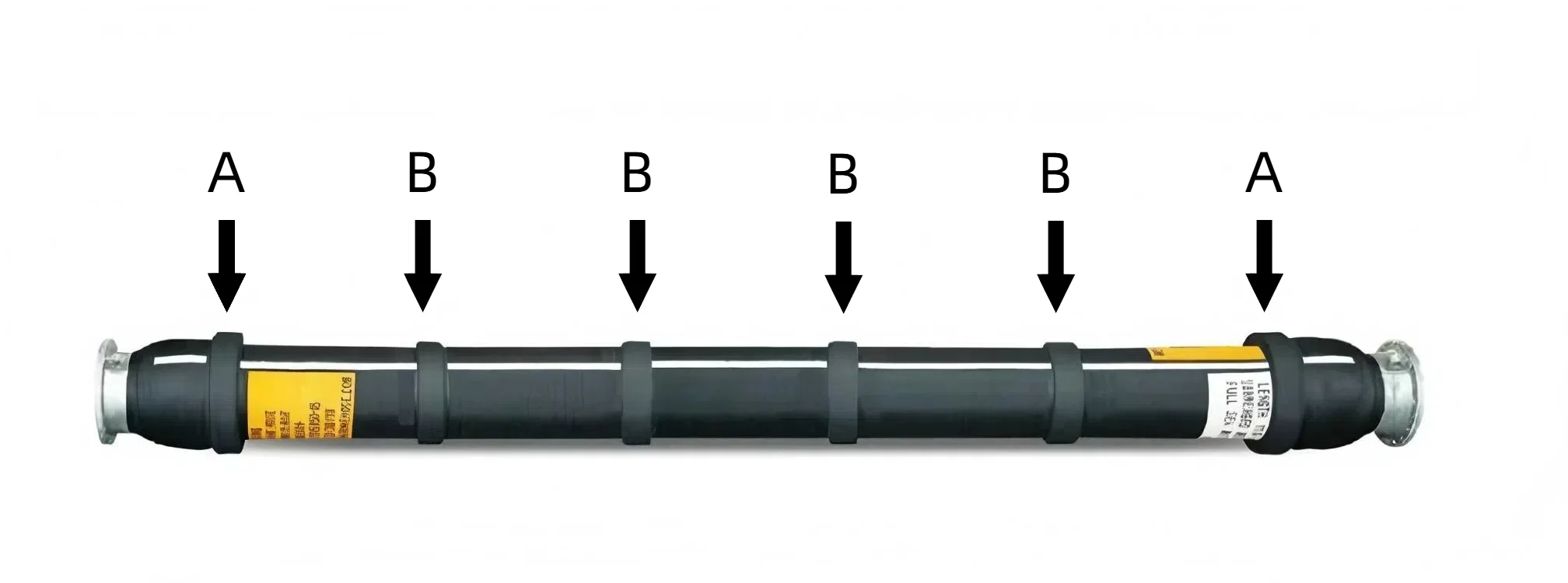
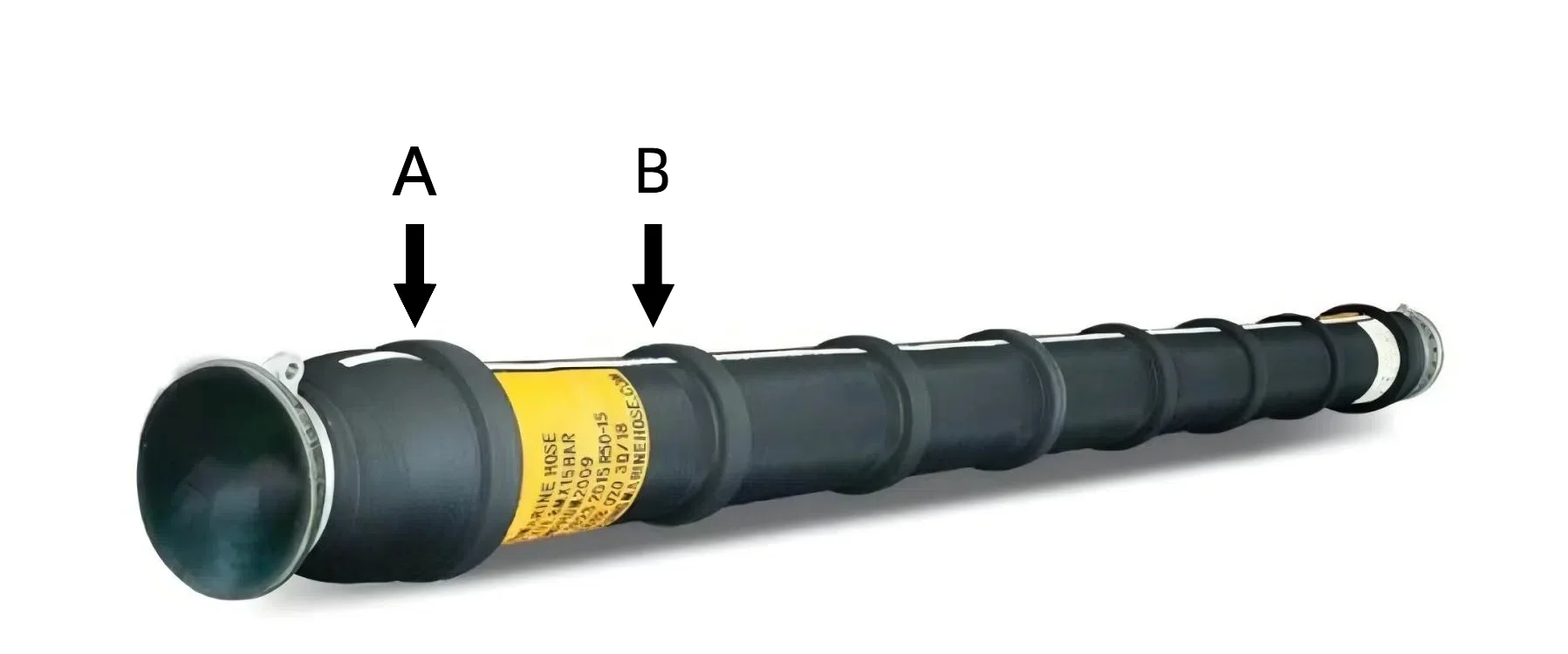
Submarine Hose with One End Reinforcement ( with collars )

Mainline Submarine Hose ( with collars )

Single carcass one reinforcement end submarine hose for use to connect sea bed manifold or buoy connection.

Rated working pressure: 15 – 19 bar
Minimum bending radius: 4D ( up to 2D without any permanent deformation )
Electrical continuity: Discontinuous or as requested

Data for standard 15 bar – 19 bar pressure ratings

Nominal Inner Diameter

( mm )   

Weight in air ( kg )    Outer diameter ( mm )    Minimum bending radius ( m )   
9.1m    10.7m    12.2m    A    B   
150 ( 6” )    382/144    419/161    456/178    368    254    0.6 ( 2.0’ )   
200 ( 8” )    485/218    541/243    596/268    471    311    0.8 ( 2.8’ )   
250 ( 10” )    575/286    756/315    837/344    471    368    1.0 ( 3.3’ )   
300 ( 12” )    893/327    1003/372    1013/417    581    471    1.2 ( 4.0’ )   
400 ( 16” )    1808/659    2028/726    2248/793    697    581    1.6 ( 5.3’ )   
500 ( 20” )    2412/928    2694/1019    2976/1110    799    697    2.0 ( 6.6’ )   
600 ( 24” )    3369/1367    3775/1572    4181/1659    946    799    2.4 ( 8.0’ )   
Get s Free Quote

Mainline Submarine Hose ( with collars )

Submarine-Hose-with-One-End-Reinforcement-with-collars

Single carcass Mainline submarine hose with collars for use as a subsea mainline hose to connect seabed manifolds to buoy connections used on monobuoy systems.

Rated working pressure: 15 – 19 bar
Minimum bending radius: 4D ( up to 2D without any permanent deformation )
Electrical continuity: Discontinuous or as requested

Data for standard 15 bar – 19 bar pressure ratings

Nominal Inner Diameter

( mm )   

Weight in air ( kg )    Outer diameter ( mm )    Minimum bending radius ( m )   
9.1m    10.7m    12.2m    A    B   
150 ( 6” )    372/144    415/161    458/178    368    254    0.6 ( 2.0’ )   
200 ( 8” )    505/217    561/242    617/267    471    311    0.8 ( 2.8’ )   
250 ( 10” )    681/282    762/311    843/340    471    368    1.0 ( 3.3’ )   
300 ( 12” )    942/346    1052/381    1162/416    581    471    1.2 ( 4.0’ )   
400 ( 16” )    1389/592    1559/659    1729/726    697    581    1.6 ( 5.3’ )   
500 ( 20” )    1840/837    2072/928    2304/1019    799    697    2.0 ( 6.6’ )   
600 ( 24” )    2704/1254    3030/1399    3356/1544    946    799    2.4 ( 8.0’ )   
Get s Free Quote

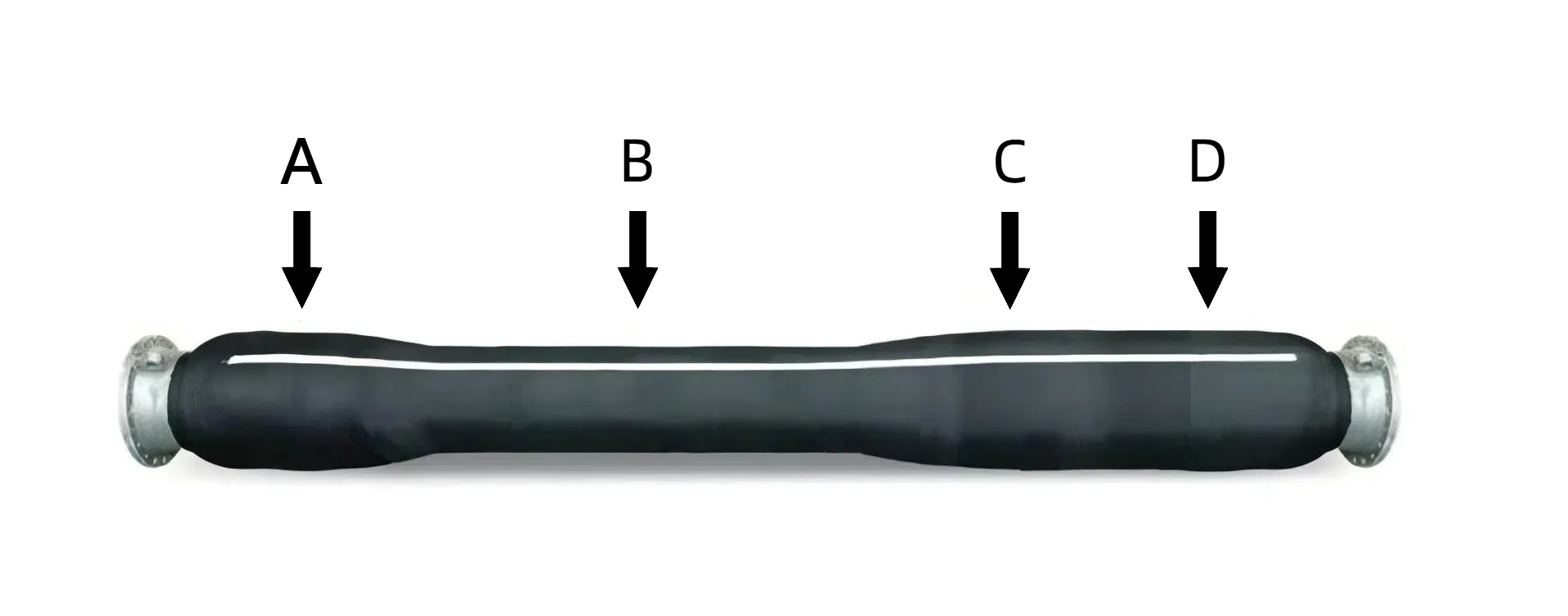
Submarine Hose with One End Reinforcement

Mainline-Submarine-Hose

Single carcass one reinforcement end submarine hose for use to connect sea bed manifold or buoy connection.

Rated working pressure: 15 – 19 bar
Minimum bending radius: 4D ( up to 2D without any permanent deformation )
Electrical continuity: Discontinuous or as requested

Data for standard 15 bar – 19 bar pressure ratings

Nominal Inner Diameter

( mm )   

Weight in air ( kg )    Outer diameter ( mm )    Minimum bending radius ( m )   
9.1m    10.7m    12.2m    A    B    C    D   
150 ( 6” )    364/141    402/156    440/171    305    210    240    320    0.6 ( 2.0’ )   
200 ( 8” )    473/215    524/238    575/261    355    265    295    375    0.8 ( 2.8’ )   
250 ( 10” )    658/282    731/309    804/336    415    320    345    430    1.0 ( 3.3’ )   
300 ( 12” )    836/325    928/354    1020/383    485    375    410    500    1.2 ( 4.0’ )   
400 ( 16” )    1738/642    1928/701    2118/760    575    475    540    645    1.6 ( 5.3’ )   
500 ( 20” )    2312/904    2554/984    2796/1064    695    580    650    780    2.0 ( 6.6’ )   
600 ( 24” )    3244/1338    3600/1467    3956/1596    810    700    775    905    2.4 ( 8.0’ )   
Get s Free Quote

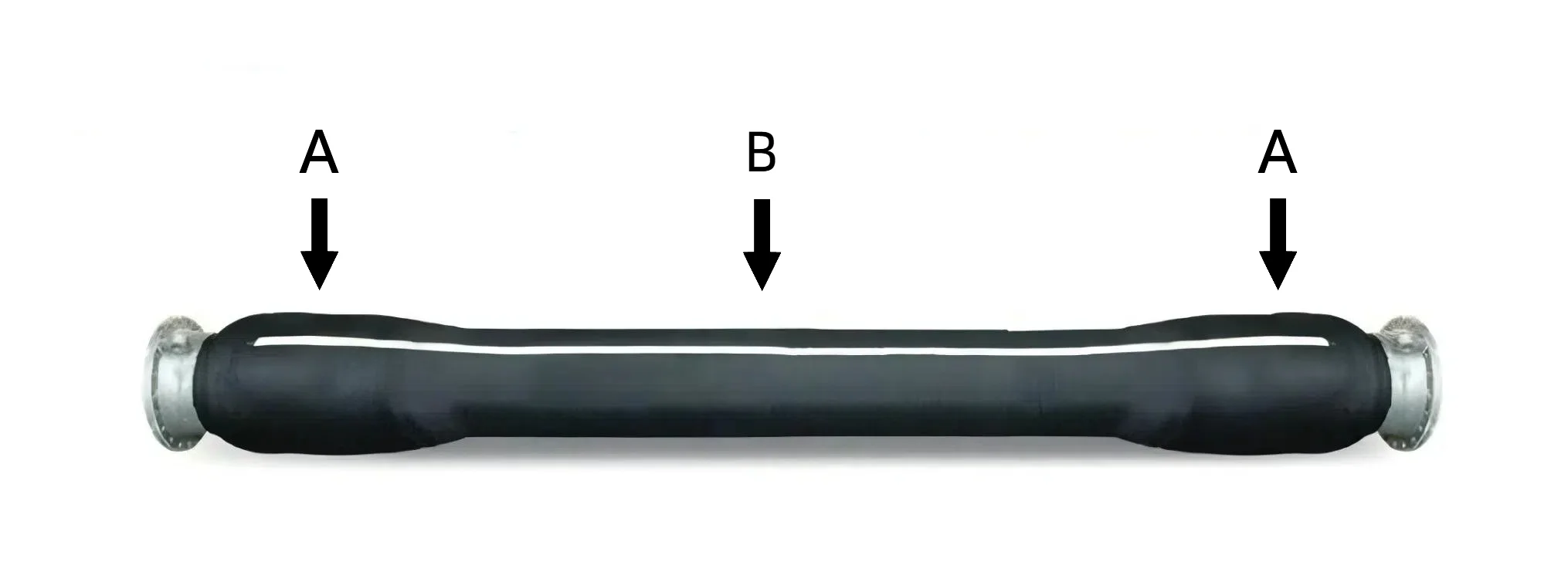
Mainline Submarine Hose

Submarine-Hose-with-One-End-Reinforcement

Single carcass hose mainline submarine hose for use as the main submarine hose in the string to connect between sea bed manifold and buoy connection used on monobuoy systems.

Rated working pressure: 15 – 19 bar
Minimum bending radius: 4D ( up to 2D without any permanent deformation )
Electrical continuity: Discontinuous or as requested

Data for standard 15 bar – 19 bar pressure ratings

Nominal Inner Diameter

( mm )   

Weight in air ( kg )    Outer diameter ( mm )    Minimum bending radius ( m )   
9.1m    10.7m    12.2m    A    B   
150 ( 6” )    342/137    380/152    418/167    305    210    0.6 ( 2.0’ )   
250 ( 10” )    639/272    712/299    785/326    415    320    1.0 ( 3.3’ )   
300 ( 12” )    810/305    902/334    994/363    485    375    1.2 ( 4.0’ )   
400 ( 16” )    1216/560    1359/619    1502/678    575    475    1.6 ( 5.3’ )   
500 ( 20” )    1600/778    1792/858    1984/938    695    580    2.0 ( 6.6’ )   
600 ( 24” )    2404/1180    2680/1309    2956/1438    810    700    2.4 ( 8.0’ )   
Get s Free Quote

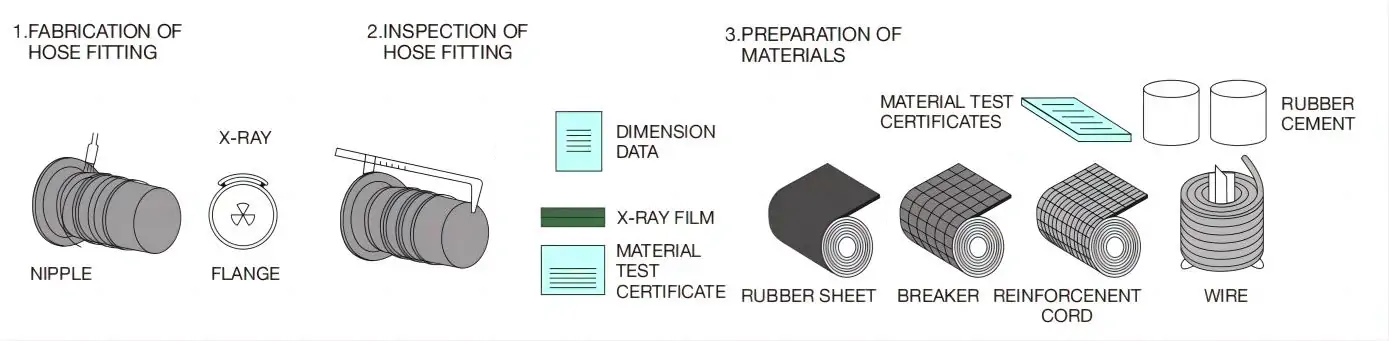
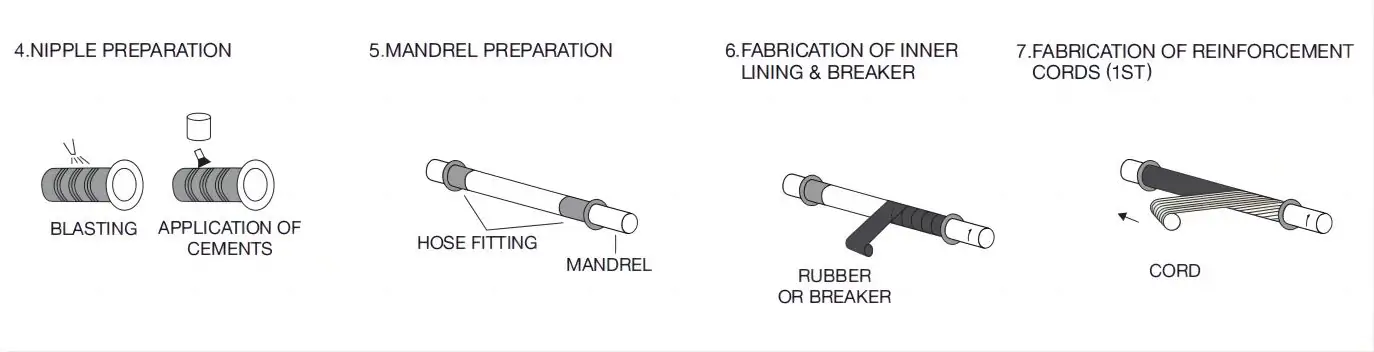
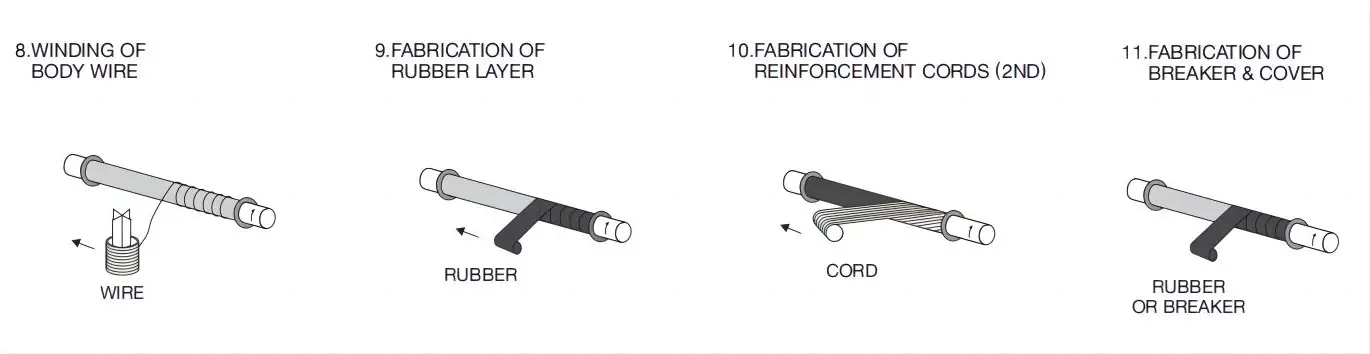
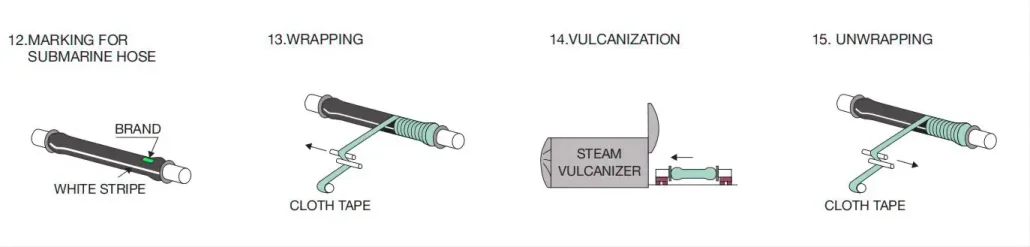
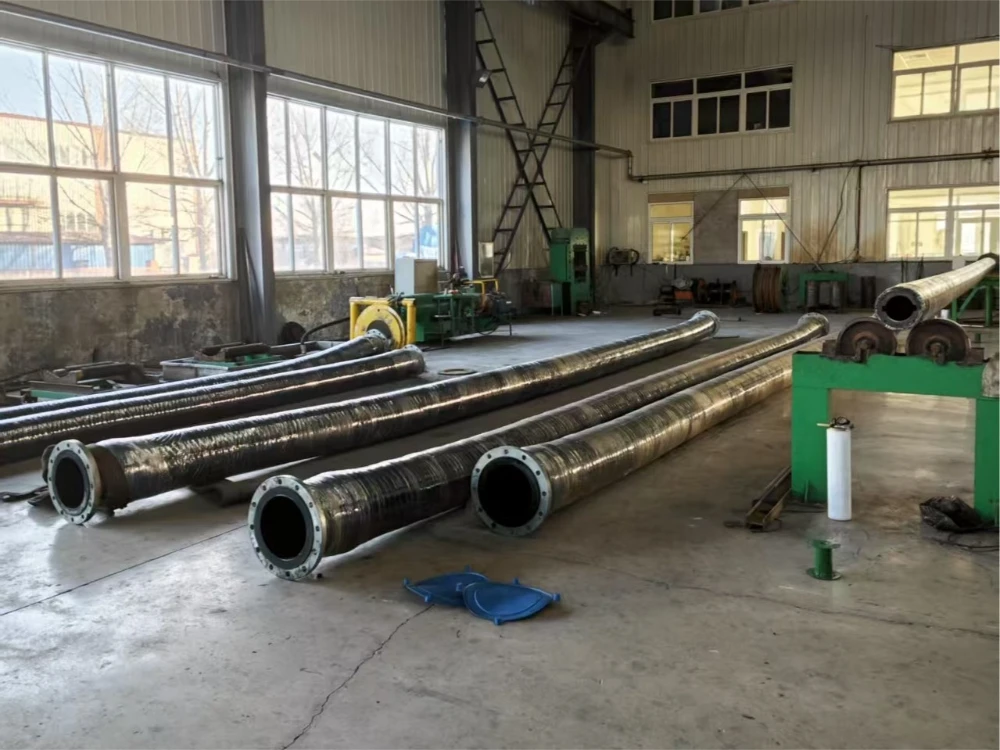
Submarine Hose/Base Hose Production Process

Submarine-Hose-Base-Hose
Submarine-Hose-Production-Process
Base-Hose-production-process
Production-Process

Advantages of Jerryborg Submarine Hoses

Built on practical offshore experience

  • It is designed to take into account actual working conditions such as water depth, tides, buoy movement, and wave patterns.

Rugged and flexible construction

  • It combines the high strength and flexibility required for deep water and dynamic environments.

Double lining for extra protection

  • Features a specially developed second liner for increased resistance to aggressive fluids.

Low-stress end connections

  • End connections are designed using finite element analysis to minimize stress and extend hose life.

Fatigue-resistant construction

  • Designed to cope with repeated bending and movement without degradation of performance over time.

In-house formulated liners

  • Liners are developed and manufactured in-house to ensure consistent resistance to H₂S, high aromatics, MTBE, and other challenging media.

Prevents Deep Collapse

  • Our submarine hoses have been designed and tested to exhibit good resistance to compression and collapse at great depths, even with empty hoses.

Manufactured according to GMPHOM 2009 guidelines

  • Hose construction meets industry standards for critical marine applications.
Jerryborg-Submarine-Hoses
Advantages-of-Jerryborg-Submarine-Hoses

FAQs

In marine liquid transport projects, if the pipeline needs to be laid underwater for extended periods and should not be affected by surface operations and ship activity, submarine hoses are typically chosen. These hoses are generally laid on the seabed or fixed at a certain depth for connecting vessels, offshore facilities, or shore-based pipelines. Compared to surface-floating transport methods, underwater hoses are more stable, less susceptible to external environmental interference, and more suitable for projects with continuous operation.

Jerryborg Marine’s submarine hoses are primarily used in these relatively fixed transport conditions with long operating cycles.

In actual projects, the main difference between submarine hoses and floating hoses lies in their deployment method and operating environment. Floating hoses operate on the surface, while submarine hoses are permanently submerged.

This means that submarine hoses require more consideration of water pressure, seabed conditions, and long-term immersion during design. During project communication, Jerryborg Marine typically confirms the hose’s laying depth and operating environment before deciding on the most suitable hose type.

The water depth at which submarine hoses are laid varies depending on the project. Some projects only require laying in shallow near-shore waters, while others involve transport in deeper waters.

Water depth directly impacts the hose’s structural design and selection. In actual projects, Jerryborg Marine considers water depth and operational methods to provide underwater hose configurations suitable for the specific water conditions, rather than simply using a uniform specification.

In marine transport projects, submarine hoses are primarily used for the underwater transport of crude oil, refined oil products, and other liquid media. Different media vary in flow rate, temperature, and frequency of use.

These factors all affect the hose’s actual performance. When selecting a hose, Jerryborg Marine typically considers the media characteristics and project operating methods to ensure it best meets the actual transport requirements.

Underwater operating environments are relatively complex; ocean currents, seabed conditions, and prolonged immersion can all affect the hose. Submarine hoses need to maintain structural stability during transport while adapting to environmental changes.

Therefore, in actual projects, the hose laying method and usage conditions often need to be planned in advance. Jerryborg Marine assists clients in identifying these environmental factors early in the project, ensuring the hose is best suited to the site conditions.

Submarine hoses are typically used in marine transport systems with well-defined structures and relatively fixed connections. Examples include liquid transport systems between vessels and shore-based facilities, or connections between vessels and offshore platforms, mooring buoys, etc. In these systems, the hoses operate underwater for extended periods, do not participate in surface operations, and do not require frequent repositioning. Therefore, underwater deployment is more suitable to ensure operational continuity and stability.

In actual projects, we consider the system structure, connection methods, and operational cycle to determine whether a submarine hose is appropriate. Jerryborg Marine also assists clients in confirming the rationality of underwater delivery solutions based on this information in the early stages of a project.