


Cryogenic hoses are common in modern industries. These hoses help transport cryogenic liquids (very cold) in different systems. However, different types of cryogenic hoses are available on the market. Different people choose different types of cryogenic hoses. This raises a question: Why choose one cryogenic transfer hose over another?
All cryogenic hoses carry very cold liquids. These liquids can have temperatures below −250 °C. Despite their same functionality, different cryogenic hoses behave differently. They also vary in efficiency as compared to mining and other hoses. In this article, I will cover the basics of cryogenic hoses and how to choose them. So, let’s get started.
What Is a Cryogenic Transfer Hose?

Before we go further, I will first help you understand the basics of cryogenic hoses.
Cryogenic hoses are safe and rated to operate at very low, freezing temperatures. These hoses are very durable and withstand extreme pressure with ease. They are commonly used to transfer low-temperature liquids and gases. These include liquid nitrogen, liquid oxygen, liquid argon, and LNG.
Simply put, these hoses are ideal for transferring very low-temperature gases and liquids. In construction, these hoses are typically made of stainless steel. Their internal tubing is made of stainless steel. They also have corrugations, which also consist of stainless steel. These corrugations make these hoses very flexible.
Remember, these hoses can be exposed to movement, bending, and vibration during use. For example, if these hoses are used to transfer cryogenic liquid from a tank to a storage system, the hoses may be exposed to vibration. If the hoses are not flexible, they may break or get damaged. That’s why these hoses have corrugations, which add flexibility.
Interestingly, there are different types of cryogenic hoses, which are as follows:
- Non-insulated cryogenic hoses
- Vacuum-jacketed cryogenic hoses
Non-insulated cryogenic hoses have no insulated vacuum jacket on the inner tubing. These hoses can face heat gain during transportation of gases and liquids. So the liquid temperature can increase slightly. These hoses are cost-effective and ideal for transferring cryogenic liquids over shorter distances.
In contrast, vacuum-jacketed cryogenic hoses consist of a vacuum jacket over inner tubing. This jacket ensures minimal heat acceptance. As a result, the temperature of the liquid present inside the hose does not change significantly. These hoses also feature stainless steel braiding, another major advantage.
Why Is Choosing the Right Cryogenic Hose Important?
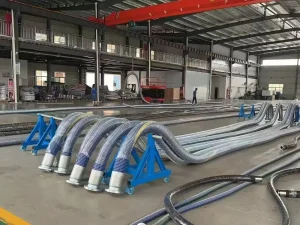
Choosing the right cryogenic hoses is crucial to system safety. Different cryogenic hoses suit different temperatures and pressures. Imagine you want to transfer a liquid at −250°C. In that case, you must choose cryogenic hoses rated for that temperature.
If your hose isn’t rated for that low a temperature, don’t choose it. Instead, choose a hose rated for −270°C. This way, you can transport the gas (at very low temperatures) efficiently. Cryogenic hoses can also be rated for different pressure ranges, not just temperature.
Choosing hoses with the wrong or mismatched pressure rating is always a mistake. One often-overlooked factor is insulation. Uninsulated cryogenic hoses can experience temperature drops in the liquid. You should not choose such non-insulated hoses when you want no temperature changes in the liquid being transferred.
In contrast, some cryogenic hoses have vacuum jackets for insulation. This jacket is present on the surface of the inner tubing. This prevents a gain in temperature. This way, the liquid being transferred through these hoses does not face temperature changes. They remain at freezing temperature, which is key for their performance. If you choose the wrong cryogenic hoses, you may run into issues.
Why Choose One Cryogenic Transfer Hose Over Another?
Different cryogenic hoses have different requirements and capabilities. So you choose hoses based on their specifications and capabilities.
For example, some are rated for very high pressure while others are suitable for low pressure. Similarly, some hoses offer excellent insulation so that no temperature gain happens. In contrast, some have poor insulation. People choose one cryogenic hose over another based on their needs.
Sometimes, cryogenic liquids are required to be transported over shorter distances. In such cases, those with poor insulation work fine. These hoses are affordable and ensure smooth transportation of cryogenic liquids. In some cases, you might need to transport the cryogenic liquid over a longer distance. In that case, you’ll need a cryogenic hose with excellent insulation.
For example, people prefer vacuum-jacketed cryogenic hoses over non-insulated hoses for longer-distance transportation. Many other factors determine which type of cryogenic hose works best. Different conditions and applications require different cryogenic hoses. Selection depends on capabilities, application demands, and more.
Below are some key factors which affect the selection of cryogenic hoses.
1- Type of Cryogenic Fluid
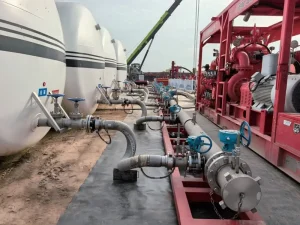
The type of cryogenic hose you should use depends on the fluid you’re handling. Different fluids and gases have different hose requirements. For example, liquid nitrogen has a lower temperature of around −196°C. For this, you can use a hose that is not rated for extremely low temperatures. Liquid helium has an even lower temperature. When working with helium, you’ll need cryogenic hoses rated for extremely low temperatures. Always analyze the type of cryogenic fluid before choosing cryogenic hoses.
2- Working Pressure & Temperature
Different cryogenic hoses have specific pressure and temperature ratings. If you don’t consider it, you’ll end up choosing the wrong hose. If this happens, your cryogenic hoses may not withstand liquid temperatures and pressures. As a result, they may malfunction, crack, or become too stiff. Therefore, you should analyze the pressure and temperature your cryogenic fluid is present at. This way, you can choose the right hose that works optimally. A mismatched pressure or temperature rating can lead to disaster instead of smooth gas transport.
3- Hose Diameter & Thickness
Considering hose diameter and thickness is crucial before choosing cryogenic hoses. If you want cryogenic fluid to flow slowly, you should choose a hose with a larger diameter. If you want more fluid to flow at high pressure, choose hoses with smaller diameters. Beyond diameter, the thickness of cryogenic hoses also matters. Thicker hoses are typically stiffer and less flexible. Handle these hoses with care, as they can be damaged quickly. In contrast, thinner cryogenic hoses are more flexible.
4- Corrugation Design & Braid (Reinforcement)
Consider corrugation and braiding when choosing cryogenic hoses. Corrugation ensures the hose becomes flexible. As a result, when the hose is shaken or vibrates, the corrugation protects it from breaking. Even with slight bends and vibration, you won’t face leakage issues with cryogenic hoses. Second, braiding is a reinforcing layer on the inner tube of the hoses. Because of this braid, cryogenic hoses can withstand higher pressure. Even under extreme conditions, the hose will perform optimally. You should always prefer cryogenic hoses with corrugation and braiding.
5- Vacuum Insulation and Heat Leak
As mentioned above, different types of cryogenic hoses are available. Among these, insulated and non-insulated cryogenic hoses are very popular. Non-insulated cryogenic hoses are prone to heat gain, which affects fluid temperature. These hoses are only suitable for cryogenic fluid transportation over short distances. In contrast, cryogenic hoses with vacuum insulation do not gain heat. This keeps the hoses insulated and prevents temperature changes in the fluids. If you aim to transfer fluid over a longer distance, insulated hoses are a better option.
6- Hose Length & Material
Hose length and materials are two important factors. You should always consider a mid-length hose. Choosing a cryogenic hose that is too long can result in a loss of pressure. Longer hoses can also increase heat transfer, affecting the temperature of cryogenic fluids. Remember, a cryogenic hose that is too small may not be very flexible and can get damaged if bent. Also, choose a material compatible with the cryogenic fluids or gas. The most common material for these hoses is stainless steel. Why? It is durable and can withstand extremely low or freezing temperatures.
7- Static vs Dynamic Operation
Different cryogenic hoses are used under different conditions. In static operation, cryogenic hoses remain static and do not move. Even with static fixed connections, these hoses may still experience minor movements. You can choose those that are slightly less flexible in this case. In contrast, cryogenic hoses designed for dynamic operation must be very flexible. Why? Because these hoses experience constant movement, vibration, and shaking. If they are not flexible enough, they may crack, break, and be damaged. Always consider the operating conditions before choosing a cryogenic hose.
Conclusion
In conclusion, different types of industrial hoses are available. Some are rated for very low temperatures. These hoses are called cryogenic hoses and are used for transporting cryogenic fluids. Cryogenic fluids or gases are those present at extremely low (freezing) temperatures. Cryogenic hoses are of different types and qualities.
This makes people prefer one over another, which is quite common. Why? Because different cryogenic hoses have unique properties, capabilities, and specifications. You should choose cryogenic hoses after carefully analyzing your needs. In this article, I discuss everything about cryogenic hoses and how to select them.